
The Dallas County Most Wanted Program
The Sheriff's official Most Wanted page is the county's named program channel. Dallas County keeps this page sparse. It carries a Most Wanted heading and the Sheriff's contact block. There is no roster, search form, result count, reward notice, or update date. That limited display matters. Treat the page as a spot to check for notices and contacts, not as proof that every Dallas County warrant appears online. The page may display individuals at times. Read those entries at the source, where the agency can update or remove them. A copied list goes stale fast. An arrest, a surrender, a recall, or a docket change can end a notice overnight. Use the program responsibly. Report useful facts to law enforcement and let officers act. Never approach, follow, or try to detain anyone.
Dallas County Program Page Limits
The program page offers none of the tools of a searchable list. Dallas County posts no name field there. No search by birth date, case number, or warrant number exists. Court, offense, bond, and status filters are absent too. So are pagination, sorting, an export, a total, and a dated update stamp. In short, the county has no documented online full active-warrant search. The Sheriff's official home page still earns a bookmark. It carries the agency's verified phone, email, address, hours, and jail information, plus the link to the Most Wanted program. When the program page gives no answer, those contacts are the practical next step. The official program page shows its public interface plainly, with no private person's information on display.
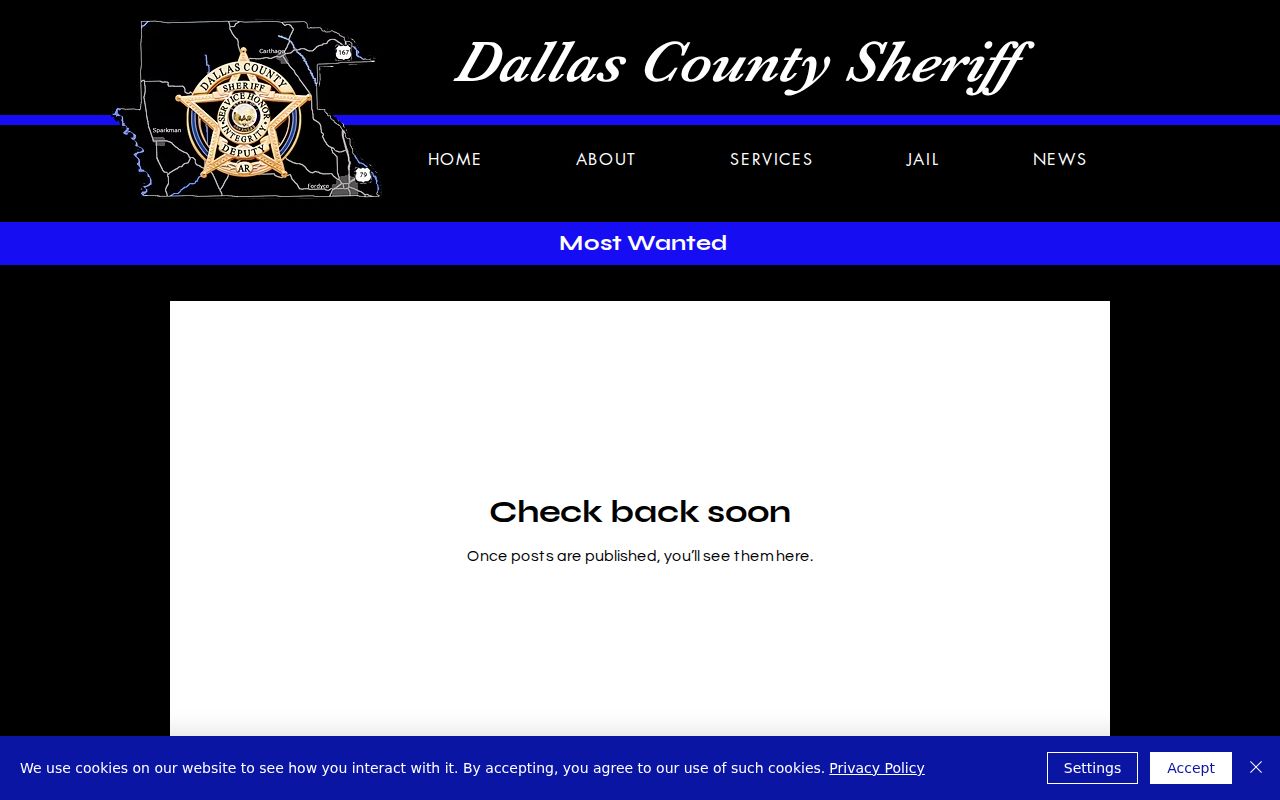
The Dallas County page gives you nothing to search with. A blank visit settles nothing. Note: An empty program page is no warrant clearance and does not replace a current court or sheriff check.
How the Lists Work
A most-wanted list is a curated subset. The agency picks which open warrants to publicize. Dallas County does not publish its selection test. Nor does it share an offense threshold, review method, removal process, or update schedule. Do not guess at those details. A selected notice can go stale quickly. An arrest, a surrender, a judge's recall, or a docket change ends it. The full Dallas County warrant picture is broader. Circuit felony matters may sit with the Dallas County Circuit Clerk. Traffic, misdemeanor, ordinance, and preliminary-felony matters may sit with the District Court Clerk. Search ARCourts can show case and docket events, but it is a case portal rather than a warrant registry. The Sheriff's program is one piece of that chain.
Note: Dallas County posts no update cadence, so confirm every apparent listing or absence through the Sheriff and the issuing court.
Dallas County Reward Details Are Not Posted
No Crime Stoppers partner is named for this program. No anonymous tip line, reward amount, eligibility test, claim code, or payment method appears on the Sheriff's pages. There is no separate warrant-tip web form either. A caller should not expect anonymity or a reward unless the Sheriff's Office confirms both through an official channel. The one published Dallas County program contact is the Sheriff's general office information. Call (870) 352-2002, write info@dallascosoar.gov, or visit 106 South Charlotte Street in Fordyce. The administrative office keeps weekday hours from 8:00 a.m. to 4:30 p.m. For an urgent sighting or immediate threat, call 911. For nonurgent program questions, use the general line and ask staff how to pass the information along.
How to Report a Tip Safely
Use a channel the Dallas County Sheriff's Office publishes. No separate tip system is posted. For nonurgent information, call the official office number and ask how staff want it. Share facts that help: a current location, direction of travel, vehicle description, and time observed. Do not guess. Do not post an accusation or share more personal information than the deputy requests.
- For immediate danger or a crime in progress, call 911.
- For nonurgent facts, call the verified general line at (870) 352-2002.
- State what you personally observed, where it happened, and when.
- Do not approach, follow, confront, or try to detain the person.
- Ask whether further contact should use the Sheriff's official email or office.
Key Point: Dallas County publishes no separate anonymous or reward channel, so ask the Sheriff about privacy before giving identifying details.
Dallas County Most Wanted Is Not Jail Custody
Don't lean on the jail roster for a Dallas County warrant check. The Sheriff's inmate-roster page tracks who is in custody, not who has an active warrant. Those are two different questions. A person can sit in jail on one case while an outstanding warrant in another stays open, and an active warrant can exist with no public entry anywhere. The roster also carries no warrant-search fields. Treat it as a custody tool and nothing more. To check your own status, start with Search ARCourts. Then call the clerk of the issuing court, and follow up with the Sheriff. A family member asking about a loved one's custody can use the jail contact. Just don't mistake that answer for a Dallas County warrant records search. The official roster landing page itself shows exactly what the tool covers.
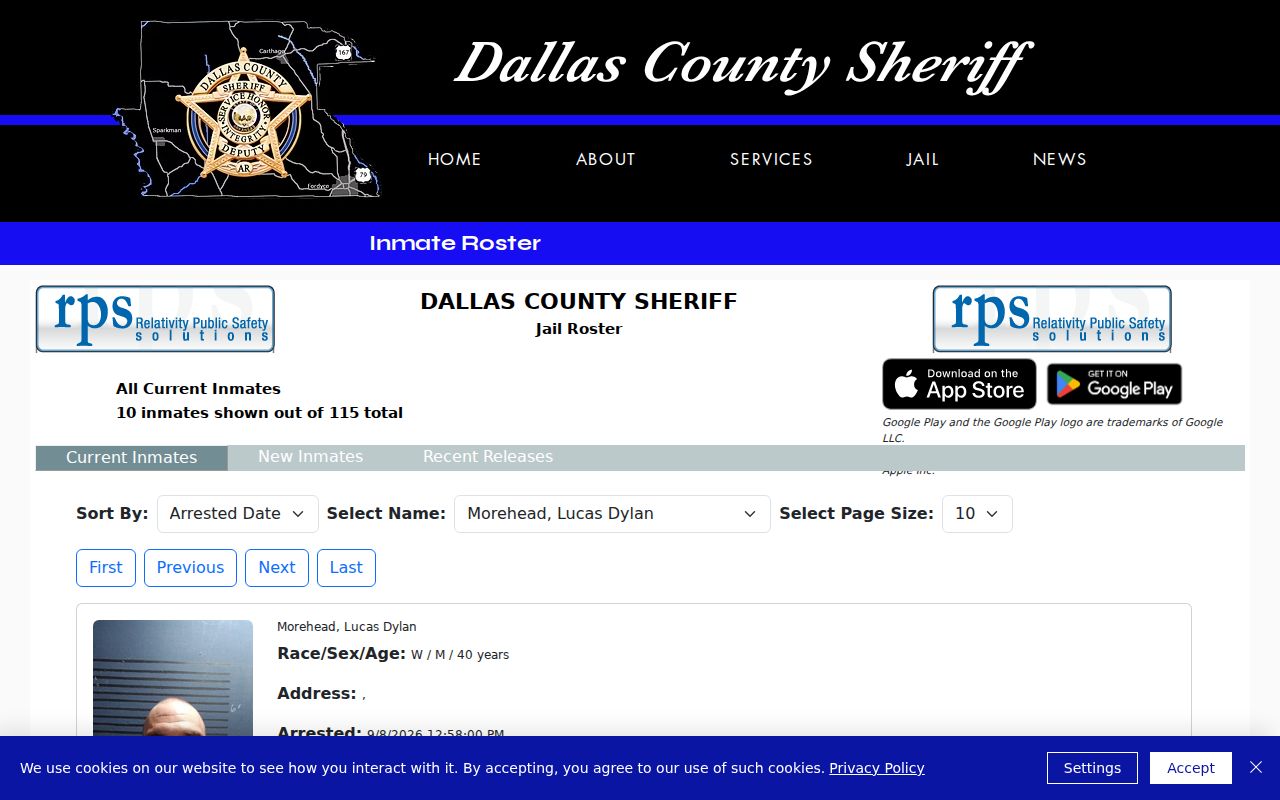
The absence of warrant fields supports the phone-and-court confirmation route.
Most Wanted vs an Active Warrant
These two terms are not synonyms. A Dallas County active warrant is a court command still unserved and not recalled. A most-wanted entry is a chosen notice drawn from some smaller group. Most open warrants never make that list. A listing can also lag behind a recent docket change.
| Feature | Most Wanted | Active Warrant |
|---|---|---|
| Scope | Selected program notices | Any qualifying unserved warrant |
| Local source | Sheriff's program page | Issuing court and serving agency |
| Public tool | No roster or fields were visible | No countywide search was found |
| Status check | Confirm with the Sheriff | Confirm with court and Sheriff |
| Resolution | Attorney, surrender, and court process | Depends on court order and case |
For status rather than publicity, see the fuller explanation of an active Dallas County warrant. It covers recall and service directly.
Dallas County Warrant Scam Warning
Scammers work the Dallas County warrant angle hard. A December 2025 Sheriff's update put it plainly: the office never calls anyone about an outstanding warrant and asks for money. So hang up if a caller claims your name is on a most-wanted list. Don't pay through any number, link, gift card, app, or account the caller hands you. That payment request is the tell. End the contact and look up the agency's number on your own. The official Dallas County anti-scam notice spells out the warning in the Sheriff's own words. Then call (870) 352-2002. Ask staff to identify the issuing court and whether they can confirm service or bond directions. Reach the issuing clerk through an Arkansas Judiciary directory, never through details the caller provided. Read the Sheriff's official notice before you act on any such call.
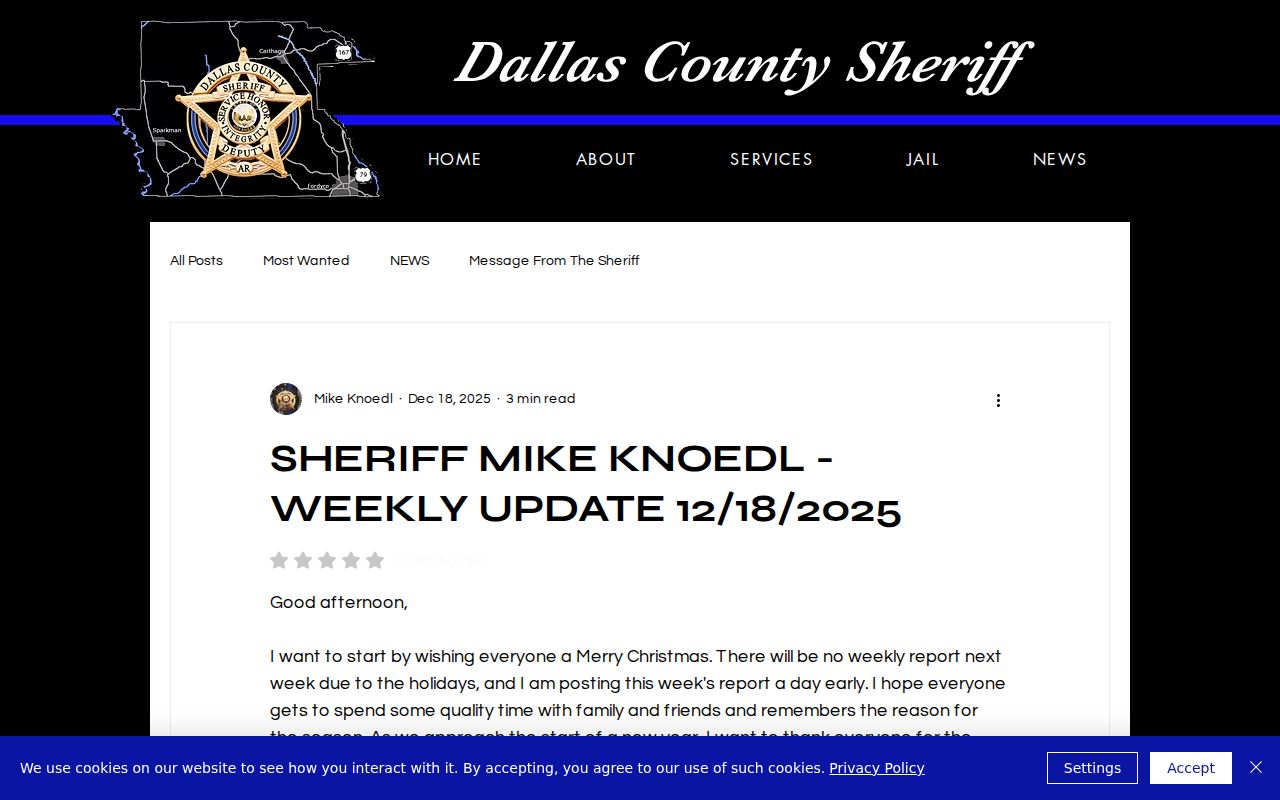
Its message makes direct verification part of every safe Dallas County warrant response.
Confirm a Dallas County Listing
Think you or a relative appears on a listing? Skip the reposts, the old search hits, and anything secondhand. Start with the official Sheriff's page. Then open Search ARCourts and hunt for a matching case by participant name, case number, or citation number. Docket entries often read arrest warrant issued, bench warrant issued, failure to appear, warrant pickup, served, or recalled. Note the court named on that case. Circuit criminal files belong to the Dallas County Circuit Clerk at (870) 352-2307, while traffic, misdemeanor, ordinance, and preliminary-felony files go to the Dallas County District Court Clerk at (870) 352-2332. For service, custody, bond type, or a surrender route, call the Sheriff/Jail at (870) 352-2002. Search ARCourts is not legal notice, so confirm any missing or stale event directly with the court.
- Check only the official program page.
- Match your own facts in Search ARCourts.
- Identify and call the issuing clerk.
- Call the Sheriff about service and bond.
- Keep written proof of any recall or court update.
Future Dallas County List Fields
No Dallas County most-wanted list is public right now. If the county launches one, useful fields would include warrant type, issuing court, and current docket status. Each field describes a step in the process. None of them would settle anything by itself.
- Warrant or case number
- The court's identifier for the warrant event or underlying case.
- Date issued
- The date the judge entered or signed the court command.
- Issuing court
- The court that controls recall, bond terms, settings, and the case file.
- Status
- A label such as issued, active, served, recalled, or quashed that must be checked for freshness.
- Bond indicator
- A docket note about release terms, including a possible no-bond label that needs court review.
- Update notice
- The date and limits of the public list, which Dallas County does not currently post.
Even a full list would be only a snapshot. The court docket and direct confirmation from a Dallas County agency remain the final word.
Dallas County and Federal Fugitive Programs
Dallas County sits in the Central Division of the Eastern District of Arkansas. That changes nothing about warrants. A federal warrant does not become a county warrant just because the person is in Dallas County. Federal matters run through the U.S. Marshals Service and the federal courts. The systems stay separate. The Sheriff's Most Wanted page makes no claim to include federal notices or task-force records. For federal dockets, use PACER. For a known federal case, read the public docket there, then verify with the Eastern District clerk or the U.S. Marshals district office. Sealed or unserved federal warrants may not show up publicly. A county clerk cannot clear a federal warrant. Nor does the federal clerk decide a Dallas County warrant. Note: agencies cooperate to serve warrants, but cooperation never merges court records or the power to recall one.
If You Believe You Are on a List
Talk to a lawyer before walking into any agency office. Counsel can check whether a Dallas County warrant is still current, name the issuing court, request a motion or hearing, and arrange a voluntary surrender if that fits. Release options vary. The Sheriff's FAQ lists own-recognizance release, a private bonding company, property bond, and cash bond. It posts no set amount. It promises no category to anyone. Call the issuing clerk about the court record. Call the Sheriff/Jail separately about custody and the exact bond type, and ask whether a judge must hold a hearing first. A bond can win release without ending the charge. A surrender can serve the warrant without resolving the case. Only the issuing court can recall a Dallas County warrant, so keep proof that the new docket event reached the serving agency.
Important: Consult an attorney, verify through official numbers, and arrange any surrender or bond before appearing at the Dallas County jail.