
Arrest Warrants in Dallas County
An arrest warrant is a judge's written order to take a person into custody over an alleged offense. Under Arkansas Code § 16-81-104, a circuit judge, district judge, or magistrate can issue one when personal knowledge or sworn information supplies reasonable grounds to believe an offense occurred. Probable cause is the standard. In Dallas County, felony cases generally run through the Arkansas Circuit Court, Thirteenth Judicial Circuit, while misdemeanors and early felony work may begin in Dallas County District Court. Once signed, the order lets an officer arrest the named person and bring them before a judge or magistrate. The criminal case then moves forward through its own hearings and docket entries.
Dallas County Arrest Warrant Path
The local path is best read as a sequence: sworn information or an affidavit → judicial review → warrant issuance → a docket event → service or surrender → first appearance and a release decision. A Dallas County Sheriff's public release described affidavits presented to a circuit judge, warrants issued, and a later first-appearance bond hearing. It illustrates the steps without turning one case into a rule for every arrest warrant.
The judge decides whether legal grounds exist. The clerk keeps the case record. Officers execute the warrant. After service, the docket may show booking, first appearance, bond, a surety, or a later disposition. No single office displays every stage, so a Dallas County arrest warrant check should never stop at one web result.
Dallas County Arrest Warrant Contents
The Arkansas Judiciary court-forms index carries the official trial-court order for an arrest warrant plus related surety forms. Those fields can help identify an order. Dallas County publishes no local warrant-number format. Treat any sample pattern as unofficial.
| Case or warrant identifier | A case number may appear, while a separate warrant number may not be public. |
|---|---|
| Person and offense | The order names or describes the person and generally states the offense and county. |
| Issuing authority | The judge, magistrate, and court connect the order to the right clerk. |
| Issue and service events | The docket may show issued, picked up, served, or recalled events. |
| Bond or surety | A bond category, surety event, or no-bond label may appear when ordered. |
| Status | Active, served, recalled, quashed, or disposed entries need confirmation. |
Search ARCourts may list an event rather than the warrant document itself. A missing document does not erase the event, and an event alone may not prove the Dallas County order is still active.
Dallas County Arrest Warrant Forms
The state forms index gives useful context on Dallas County arrest warrants. View the Arkansas Judiciary source for the blank court-form listing.
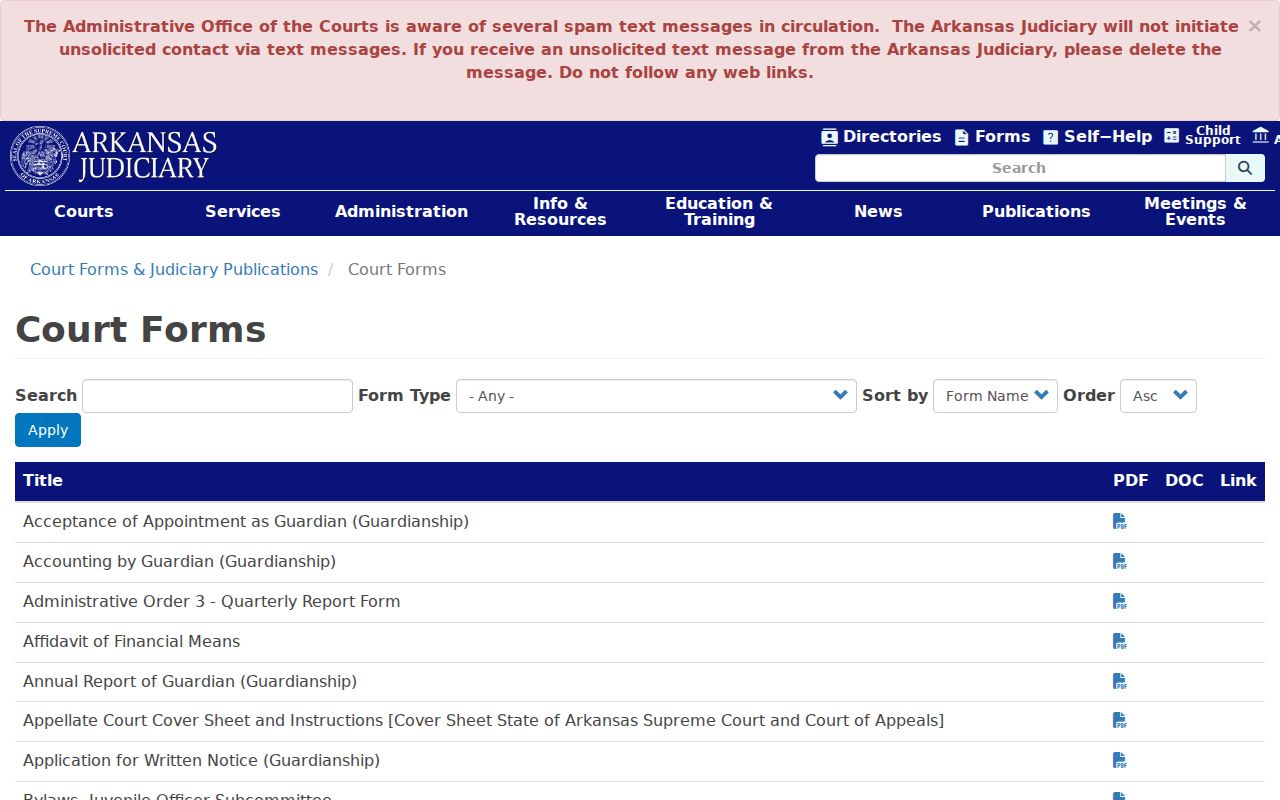
That official page shows the form family, not a completed warrant, and keeps private case data out of view. A Dallas County Sheriff's update documents the labels used in local warrant work. See the official system-language source for terms such as FTA, bench warrant, and contempt failure to pay.
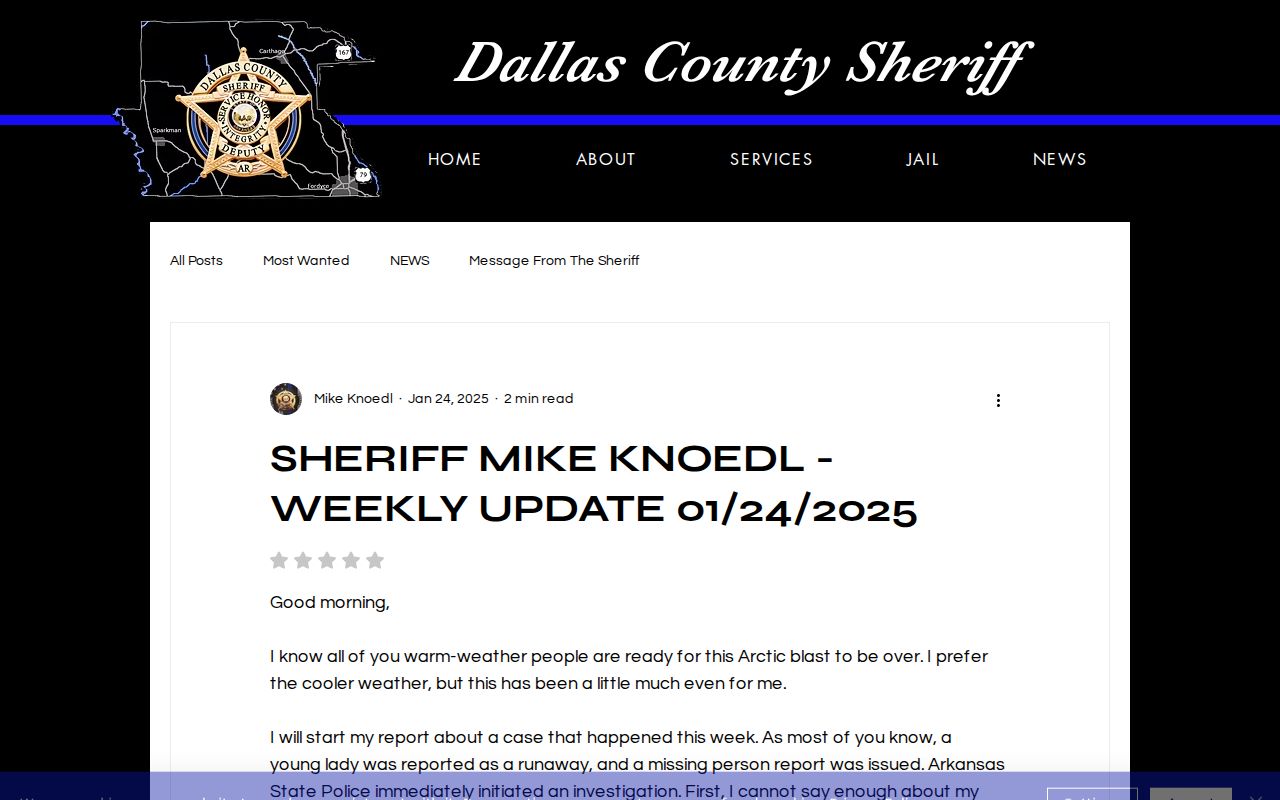
Those labels point back to the issuing court and its docket. They do not amount to a complete public arrest warrant list for Dallas County.
How Dallas County Arrest Warrants Are Served
Arkansas law lets any law enforcement officer execute an arrest warrant. The Dallas County Sheriff's Office serves or assists with county orders. Fordyce Police and other city officers may handle local matters. The service record can name an agency other than the Sheriff. Execution can follow a routine officer contact, a planned surrender, or coordination between agencies. Service means the arrest command was carried out, not that the charge was resolved. The person is taken into custody, booked, and brought through a first appearance or other court process, where a judge takes up release and future settings. Federal matters travel a separate route through the Eastern District of Arkansas and federal officers. Note: The Sheriff's Office posts no separate warrant unit, warrant-only phone line, or walk-in surrender schedule.
Confirm Dallas County Arrest Warrants
The Sheriff publishes no full Dallas County arrest warrant search. Start with Search ARCourts, using a case or citation number when you have one and participant name fields when you do not. The portal can show case status and warrant-related docket events, but it is not a statewide warrant registry and is not conclusive.
- Save the case number, court location, case type, and exact docket wording.
- For a circuit criminal or felony file, call the Dallas County Circuit Clerk at (870) 352-2307.
- For a misdemeanor or preliminary felony matter, call the District Court Clerk at (870) 352-2332.
- Confirm service, custody, surrender, and bond questions with the Dallas County Sheriff's Office at (870) 352-2002.
A specific records request can ask for an existing docket, warrant event, warrant return, or recall order. Arkansas FOIA does not force an office to build a new database or certify that no Dallas County warrant exists.
Dallas County Arrest Warrant Comparisons
An arrest warrant, a summons, and a bench warrant call for different responses. A summons directs a person to appear. No immediate arrest command is attached. A bench warrant grows out of a missed duty or a court order. Dallas County arrest warrants instead rest on probable cause tied to an alleged offense.
| Process | Basis | Immediate effect | Response |
|---|---|---|---|
| Arrest warrant | Probable cause for an offense | Authorizes custody | Verify, seek counsel, plan surrender and bond |
| Summons | Charge with appearance allowed | Orders attendance | Appear on the stated date |
| Bench warrant | Missed appearance or duty | Authorizes custody | Ask about reset, recall, or hearing |
A search warrant is different again. It authorizes a search of a described place, person, device, or thing. It is not an order to arrest anyone, though the same investigation can later produce an arrest warrant in Dallas County.
Dallas County Arrest Warrant Bond
Four release routes appear in the Sheriff's official FAQ: release on own recognizance, a private bonding company, a property bond, and cash. Own recognizance means a promise to appear, when the court allows it. A bonding company stands behind a surety bond. For a property bond, qualifying property must meet the rules. Beyond that, Dallas County publishes no warrant bond schedule, no card rule, and no set amount for warrant cases. The FAQ tells callers to reach the Jail for the exact bond type that applies. So ask a few direct questions there. Does a judge need to hold a hearing first? Where can the bond be posted? Does a docket label block ordinary release? Bond settles custody and appearance. It does not dismiss the charge.
Key point: Keep the bond receipt and confirm the next hearing with the clerk; missing it can create a bench or alias warrant.
Resolve Dallas County Arrest Warrants
Never walk into a Dallas County office on the strength of an online match or a surprise phone call alone. Verify the case number, the court, the warrant event, and its current status first. A lawyer can find out whether a motion, a planned walk-through, a first appearance, or a bond arrangement is on the table. Then call the Sheriff's Office or the Jail to confirm how voluntary surrender works. Ask which bond category applies. Ask whether the person must see a judge before release. Once surrender happens or a court order issues, check the clerk's docket for a served, recalled, or quashed entry. Recall means the court withdrew the warrant; quash means it set the warrant aside. Assume neither until the court enters and communicates the order.
Important: An active arrest warrant can lead to custody during police contact; legal advice can help arrange a safer, documented response.
Avoid Dallas County Warrant Scams
A December 2025 warning from the Sheriff is blunt: the office will not call anyone about an outstanding warrant or take payment by phone. Anyone demanding fast payment, gift cards, or account details is no source of truth on Dallas County arrest warrant status. Hang up. Use the number listed on the official Sheriff's site, then reach the issuing clerk through an Arkansas Judiciary directory. Never dial a number the caller gives you. A real court record matches by case number, court, and docket event, and payment or bond instructions should come only from the verified court, the jail, or your retained lawyer. Note: Search ARCourts can be incomplete, but an instant payment demand is no substitute for official confirmation.